- Texas Hold’em uses two private cards and five shared cards; the best five-card hand wins.
- Play fewer, stronger starting hands, and play more of them in late position.
- Pot odds help you decide when a call is mathematically sound.
- Start at micro stakes with a bankroll of many buy-ins, and never play with money you need.
Poker is different from almost every other game on a casino platform. With slots or roulette, you play against the house edge. With BunnyGaming poker, you play against other people, and the site earns through a small fee called rake. That means decisions actually matter: over hundreds of hands, better players tend to do better. In the short run, though, luck still plays a big role, which is part of what makes poker so addictive and so humbling.
This guide takes you from the basics of Texas Hold’em to the habits that help you avoid the most expensive beginner mistakes. Table formats, stakes and tournaments vary by platform and change over time, so always check the current poker lobby. For a wider overview of the platform, see What Is BunnyGaming?
Texas Hold’em basics
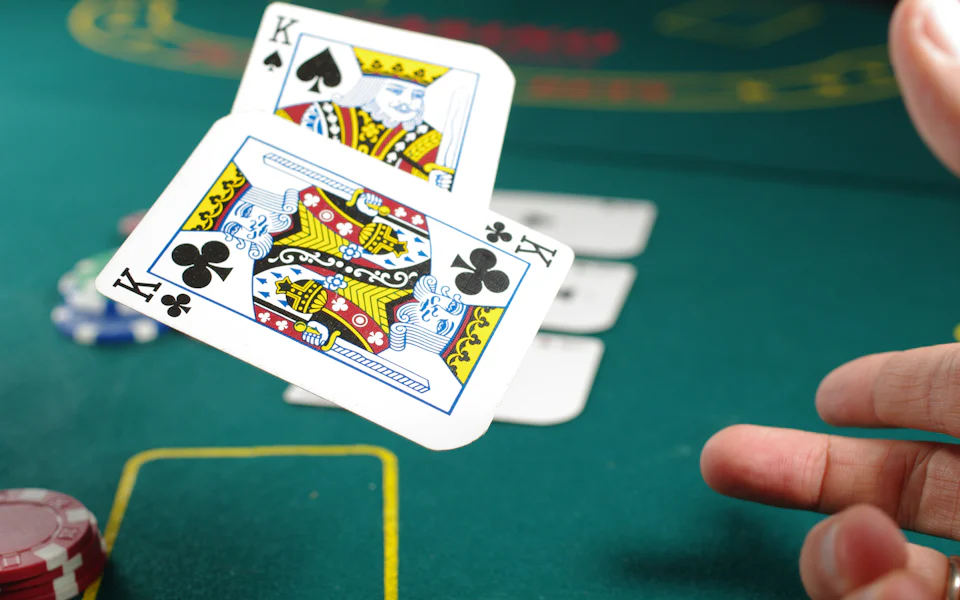
Each player gets two private cards (hole cards). Five community cards are dealt face up in stages, and you make the best five-card hand from any combination of your two cards and the five on the board. The full rules are documented on the Texas hold ’em page on Wikipedia.
- Blinds – two players post forced bets (small and big blind) to start the pot.
- Pre-flop – everyone gets two cards; betting starts left of the big blind.
- Flop – three community cards are dealt, followed by a betting round.
- Turn – a fourth card, another betting round.
- River – the fifth card and final betting round.
- Showdown – remaining players reveal; the best hand wins the pot.
On each round you can check, bet, call, raise or fold. Folding a weak hand is not losing; it is saving chips for a better spot.
Poker hand rankings
| Rank | Hand | Example |
|---|---|---|
| 1 | Royal flush | A K Q J 10, same suit |
| 2 | Straight flush | 9 8 7 6 5, same suit |
| 3 | Four of a kind | Q Q Q Q 7 |
| 4 | Full house | K K K 4 4 |
| 5 | Flush | Any five of one suit |
| 6 | Straight | 8 7 6 5 4, mixed suits |
| 7 | Three of a kind | 7 7 7 K 2 |
| 8 | Two pair | J J 5 5 A |
| 9 | One pair | 10 10 A 8 3 |
| 10 | High card | A J 8 6 2 |
How rare each hand is, and why the rankings fall in this order, is explained by the maths on the poker probability page. You do not need to memorise percentages, but knowing that flushes and straights are much rarer than one pair helps you stay calm.
Starting hands and position
The biggest leak for new players is playing too many hands. A tight, selective approach is simpler and usually more profitable at low stakes.
Strong starting hands
- Premium: AA, KK, QQ, AK – raise with these from any seat.
- Strong: JJ, 10-10, AQ, AJ suited, KQ suited – usually raise, especially in later seats.
- Speculative: small pairs, suited connectors like 8-7 suited – play cheaply in late position hoping to hit big.
Why position matters
Acting last lets you see what everyone else does before you decide. The dealer button seat and the seats just before it are the most powerful. From early position, play only your strongest hands; from late position, you can widen your range.

Pot odds made simple
Pot odds compare the price of a call with the size of the pot. Illustrative example: the pot is ₱300 and your opponent bets ₱100. You must call ₱100 to win ₱400 total, so you need to win at least 20% of the time (100 ÷ 500) for the call to break even.
A quick shortcut for draws is the “rule of 2 and 4”: count your outs (cards that complete your hand), multiply by 2 for one card to come or 4 for two cards. A flush draw on the flop has 9 outs, roughly 36% to hit by the river. If that is higher than what the pot odds require, calling is reasonable.
Cash games vs tournaments
| Format | How it works | Good for |
|---|---|---|
| Cash games | Chips equal real pesos; join or leave anytime | Flexible sessions, steady learning |
| Tournaments | Fixed buy-in; play until you bust or win prizes | Big prize potential for a small, fixed cost |
| Sit & Go | Small tournaments that start when seats fill | Shorter tournament practice |
Tournaments cap your loss at the buy-in, which suits disciplined budgeting. Cash games are better for practising decisions hand by hand. See what is available in the BunnyGaming poker section of our games hub.
Bankroll management for poker
Poker swings are real. Even good players can lose for weeks. Common illustrative guidelines:
- Cash games: keep at least 20 to 30 buy-ins for your chosen stake.
- Tournaments: keep 50 or more buy-ins, because results are streakier.
- Move down in stakes after a bad run instead of moving up to “win it back.”
With a ₱2,000 bankroll, for example, cash-game buy-ins of around ₱70 to ₱100 keep you comfortable. Deposits and withdrawals are covered in our GCash and Maya payments guide, and any poker promos should be checked against our bonuses explained breakdown.
Beginner mistakes to avoid
- Calling too much. If you would not raise, consider folding.
- Bluffing beginners. Low-stakes players often call too much, so value-bet your strong hands instead.
- Tilting. After a bad beat, take a break. Emotions cost more than cards.
- Multi-tabling too early. Master one table first.
- Ignoring rake. At tiny stakes, rake eats into results, so tight play matters even more.
Online poker etiquette and table habits
Online tables move faster than live games, and good habits keep the game pleasant for everyone:
- Act in reasonable time. Use your time bank for genuinely hard spots, not every hand.
- Keep chat friendly. No insults, no coaching others mid-hand, no spamming.
- Sit out properly if you need a break, so the table is not stuck waiting.
- Play on a stable connection. Disconnects can cost you pots; mobile data is often more reliable than crowded café Wi-Fi. Our mobile play guide has setup tips.
Reviewing your hands
The fastest way to improve is to review. After each session, pick two or three hands where you felt unsure. Ask: what did my opponent likely have, what did the pot odds say, and would folding, calling or raising have been better? Over a month, those small reviews add up to real improvement.
Playing poker on your phone
Poker on a small screen takes discipline. Turn on any “confirm bet” setting, avoid playing while walking or commuting, and stick to one table. Accidental all-in taps are a painful lesson; slow down and double-check before every big action.
Poker vs other BunnyGaming games
If you enjoy decision-making but want quicker rounds, live baccarat and blackjack-style tables in the live casino section offer a different pace, though they are played against the house edge. Prefer pure arcade action? Try our fishing games guide. Poker remains the game where study pays off the most over time.
Keep learning, keep it fun
Poker rewards patience and study, but it should still feel like a game night with the barkada, not a second job. Set session limits, take breaks, and review a few hands after each session. Our responsible gaming tips and responsible gaming page have tools that help, and international peer support like Gamblers Anonymous is there if play stops feeling fun.
Want a change of pace? Read our sports betting guide or slot games guide. Quick questions go to the FAQ, and the Play BunnyGaming checklist helps when you are ready to sit down at a table. Guide by Harold Choi. 21+ only.
Frequently asked questions
Is poker on BunnyGaming played against the house?
Poker is usually played against other players, with the platform taking a small rake from pots or tournament fees. Check the current poker lobby for formats.
What are the best starting hands in Texas Hold’em?
Pocket aces, kings, queens and ace-king are the strongest starting hands. Beginners do best by playing a small range of strong hands, especially from early position.
How big should my poker bankroll be?
A common guideline is 20 to 30 buy-ins for cash games and 50 or more for tournaments. Only use money you can afford to lose.
Can beginners win at poker?
Beginners can win individual sessions, but long-term results depend on skill, discipline and bankroll control. There are no guaranteed wins.
Keep exploring BunnyGaming
- What Is BunnyGaming? A Filipino Player’s Complete Guide
- BunnyGaming Register & Login Guide: Safe Account Setup
- BunnyGaming Slot Games: RTP, Volatility & Smart Picks
- BunnyGaming Sports Betting: PBA, NBA & Football Odds Explained
- BunnyGaming Fishing Games: How Shooting Arcades Really Work
- BunnyGaming Deposits & Withdrawals with GCash and Maya
- BunnyGaming Bonuses Explained: Wagering Math Made Simple
- BunnyGaming on Mobile: Play Smoothly on Android & iPhone
- 12 BunnyGaming Responsible Gaming Tips for Filipino Players
- BunnyGaming games hub
- BunnyGaming FAQ
- Responsible gaming tools